







The oral microbiome and periodontitis: what we know, what we are still looking for
Periodontitis is not the work of a single germ. It arises from an imbalance in the bacterial community living beneath the gums, and from an inflammatory response that can no longer switch itself off. For patients who want to understand their disease, this article sets out what is known about the oral microbiome, what remains unknown, and what a bacterial sample or a probiotic can, and cannot, offer.
Key points
- The mouth is home to more than 700 bacterial species; health rests on their balance, disease on its breakdown, known as dysbiosis [4].
- The current model describes a disrupted community in which a few 'keystone pathogens' such as Porphyromonas gingivalis raise the virulence of the whole [1] [2].
- The patient's inflammatory response matters as much as the bacteria: smoking, diabetes and individual make-up weigh on bone loss [1] [3].
- The link between oral and gut microbiomes is an active field of research, supported mainly by animal models: a hypothesis, not a demonstrated cause in humans [6].
- At the practice, a bacterial sample is taken at the first session to understand each patient's background; it does not replace the clinical and radiographic examination. Probiotics can complement mechanical treatment, without replacing it [3] [7].
Contents7 sections
What is meant by the oral microbiome?
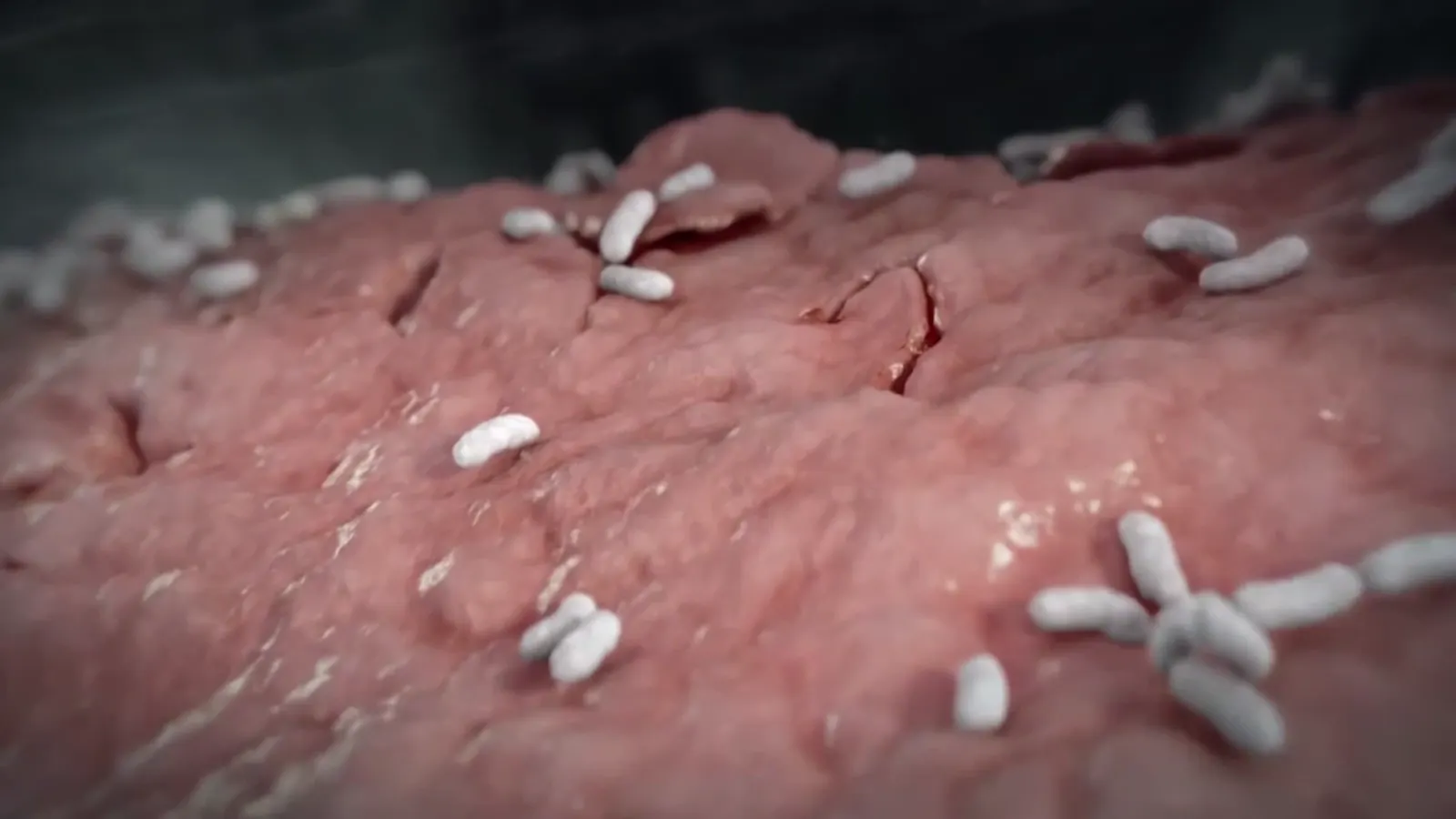
The oral microbiome is the whole population of micro-organisms, mostly bacteria but also fungi and viruses, that inhabit the mouth: teeth, tongue, cheeks, saliva and the crevice between tooth and gum. More than 700 bacterial species have been identified there, making it the body's second most diverse microbial community after the gut [4]. This population is not an enemy to be wiped out: it helps defend against passing germs and trains local immunity.
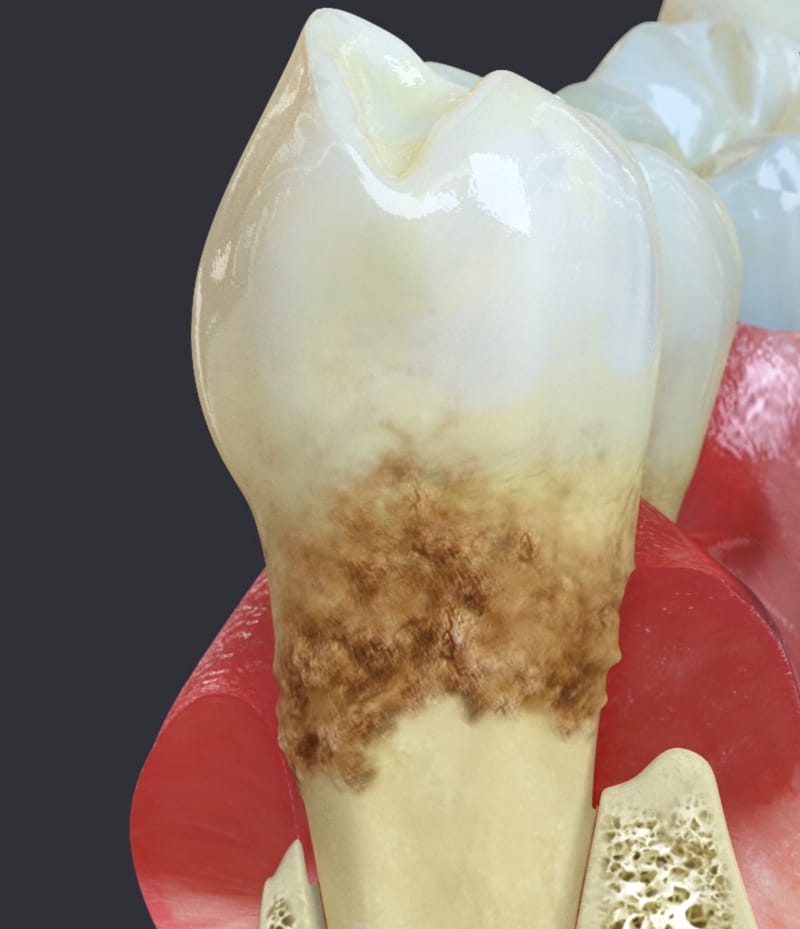
Below the gumline, bacteria organise themselves into a biofilm, a structured, sticky layer known as dental plaque, in which they cooperate, exchange nutrients and shelter one another. As long as this community stays diverse and balanced, the gum tolerates it. When its composition tips towards species that thrive on inflammation, the result is called dysbiosis: it is this shift, not the mere presence of bacteria, that opens the door to periodontitis [4].
Is periodontitis caused by 'one' germ?
No. In 1998, Socransky's team analysed more than 13,000 samples of subgingival plaque from 185 people and showed that bacteria cluster into stable 'complexes'. One of them, the red complex (Porphyromonas gingivalis, Tannerella forsythia, Treponema denticola), is the one most clearly associated with deeper pockets and bleeding gums [2]. The association is robust; on its own, it does not say who sets off what.
In 2012, Hajishengallis and Lamont proposed going 'beyond the red complex' with the model of polymicrobial synergy and dysbiosis. Here the disease begins with a disrupted community in which certain species, called keystone pathogens, manage, even in very small numbers, to evade immune surveillance and raise the virulence of the whole biofilm; P. gingivalis is the most studied example [1]. The right picture is not a single culprit but an ecosystem that has changed regime.
Why the patient's response matters as much as the bacteria
It is not the bacteria that destroy bone: it is the inflammation the body mounts to contain them, once it can no longer resolve. The dysbiotic community sustains an immune response that fails to switch off; that response in turn feeds the species that thrive on the by-products of inflammation. A vicious circle sets in [1].
Hence the importance of the individual: two people exposed to the same biofilm do not develop the same disease. Smoking, poorly controlled diabetes, genetic traits and nutritional status modulate the intensity of the inflammatory response and the tissues' capacity to repair. The European guideline for treating periodontitis (EFP, 2020) draws the consequence: stopping smoking and controlling diabetes are part of the treatment, alongside cleaning the roots [3]. That is the whole point of a medical, biological and preventive periodontology: treating the biofilm, understanding the host that carries it (see periodontitis and general health).
Mouth and gut: what is research looking for?
We swallow billions of oral bacteria every day; a healthy gut resists them. Recent work asks what happens when both linings are inflamed. In 2020, a study in Cell showed, in mice, that periodontitis drives the expansion of certain oral bacteria (Klebsiella, Enterobacter) able to colonise an already inflamed gut and worsen colitis there, partly through immune cells 'trained' in the mouth that then migrate to the colon [6].
The result opens avenues. It remains experimental, obtained in animals. In humans, associations between periodontitis and inflammatory bowel disease have been observed; nothing, to date, shows that periodontitis causes digestive disease, or that treating it prevents one. Dr Hazout follows this work with interest, and presents it for what it is: a hypothesis under exploration.
A bacterial sample: what is it for?
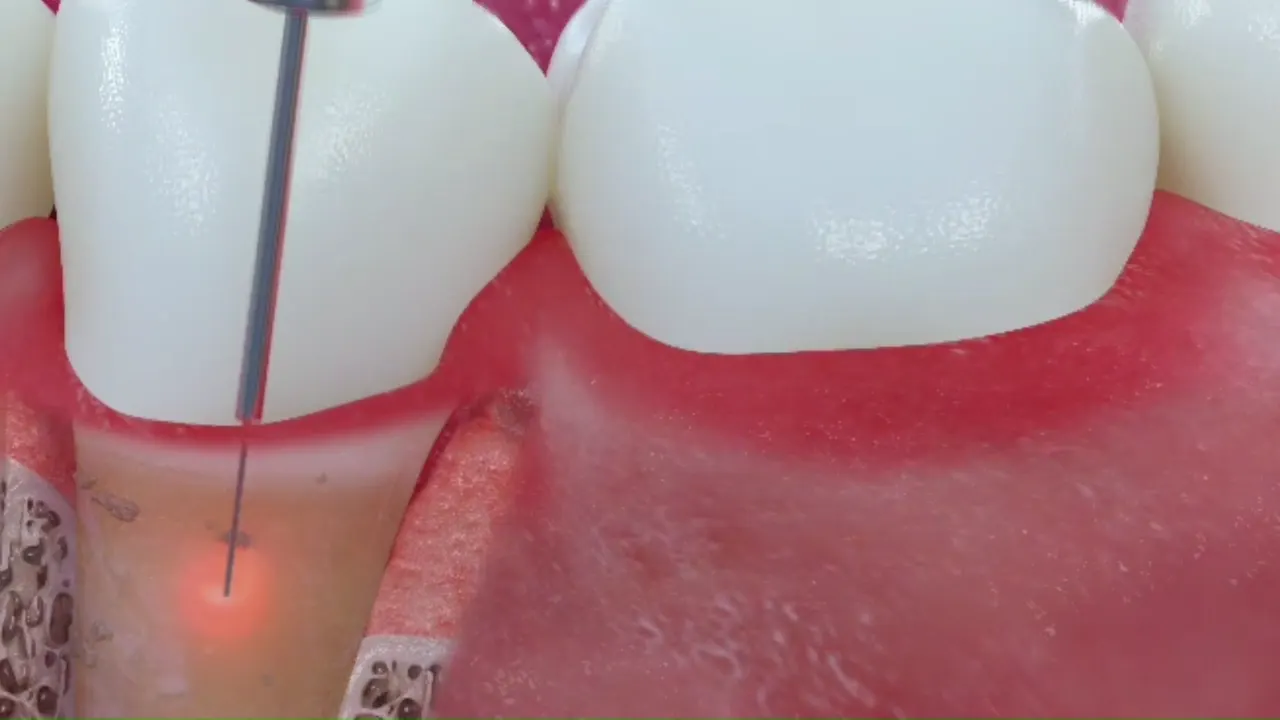
A subgingival bacterial sample collects the contents of a periodontal pocket with a sterile paper point, to identify and count certain species. At the practice it is part of the first treatment session, together with a blood sample: this is Dr Hazout's protocol for understanding each patient's background. It does not replace diagnosis, which rests on the clinical examination and radiographs, and the 2020 European guideline does not make it a mandatory step of treatment [3].
It does, however, inform follow-up. The same guideline advises against routine adjunctive antibiotics alongside root cleaning, because of side effects and bacterial resistance, while leaving the door open for specific groups of patients, for instance severe generalised periodontitis in a young adult [3]. The benefit of these antibiotics exists on average but is modest: less than half a millimetre of additional pocket reduction at six and twelve months, with more side effects [5]. Knowing which bacteria are present then helps decide whether a prescription is justified, and which one.
- What it offers: objective evidence of a heavy load of certain species, documentation of a severe or treatment-resistant form, help in choosing an antibiotic when one is considered, comparison of the flora before and after treatment [3] [5].
- What it does not do: make the diagnosis on its own, predict progression on its own, or replace mechanical root cleaning.
- Its place and cost are discussed on the blood tests and supplements page.
Probiotics: a complement to treatment
If the disease is an imbalance, it makes sense to try to favour the bacteria associated with health over those associated with disease: that is the principle of probiotics, most often strains of Lactobacillus reuteri. Used alongside non-surgical treatment, they have shown clinical benefits in trials, limited on average [7]; results vary with strains and protocols [8]. The 2020 European guideline does not include them among routine steps [3].
What really changes the microbiome
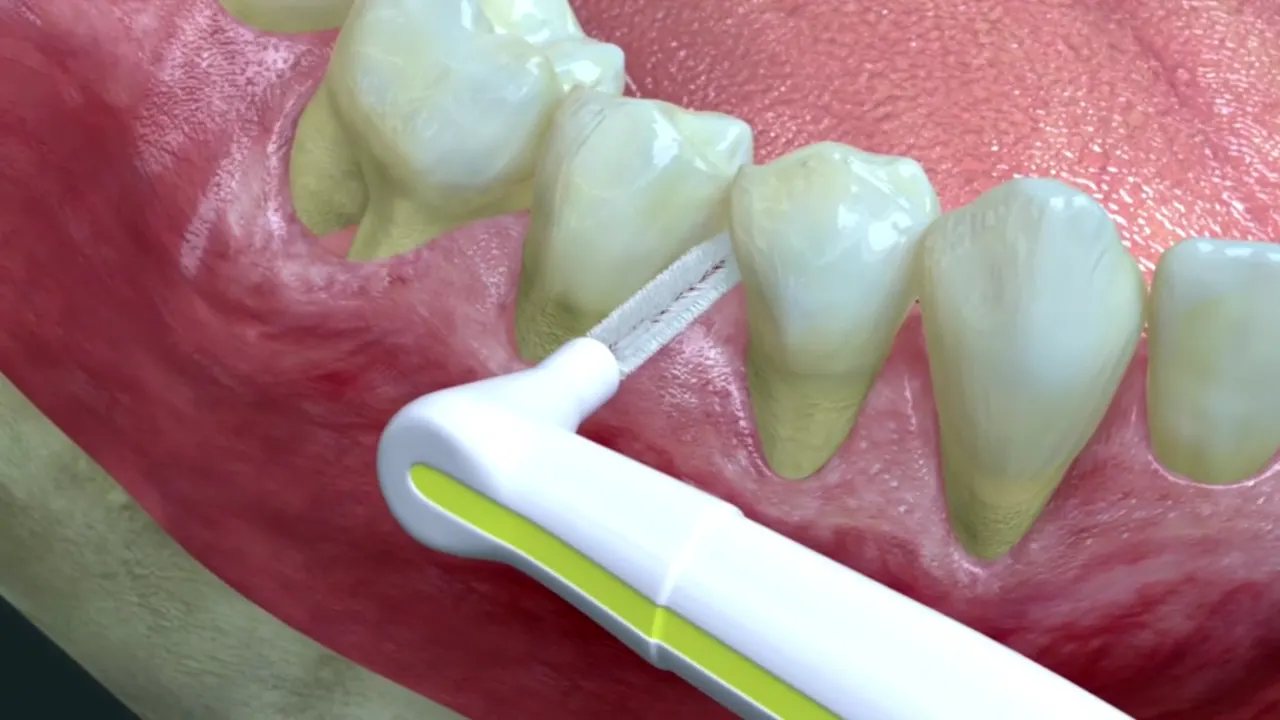
What durably alters the subgingival community is well known, and less glamorous than a capsule. First, mechanical disruption of the biofilm: root surface debridement, cleaning the roots below the gumline, removes biofilm and calculus and lets a community closer to that of health settle back in. Then daily oral hygiene, which stops the biofilm from reorganising itself in depth. Then stopping smoking and controlling diabetes, recommended by the EFP in the treatment of any periodontitis, because they change both the inflammatory background and the ecology of the biofilm [3].
Finally, periodontal maintenance, which repeats these steps at a suitable interval. In this frame, the microbiome is not an adversary to be eliminated but an ecosystem to be brought back, and then kept, in a state compatible with healthy gums. That is the approach Dr Victor Hazout offers at the practice in Levallois-Perret: treat, understand, prevent.
Frequently asked questions
Can you 'catch' periodontitis?
Oral bacteria are passed on, notably within a couple or a family, but the disease depends on the imbalance of the community and on each person's response. Sharing bacteria is not the same as sharing the disease.
Do I need a bacterial sample before treatment?
Not as a matter of routine. Diagnosis and treatment planning rest on the clinical and radiographic examination. A sample can be discussed in severe or treatment-resistant forms, especially if an antibiotic is being considered.
Do antiseptic mouthwashes 'clean' the microbiome?
They reduce visible plaque for a time and can be useful over a short period. They do not reach the bottom of pockets, and prolonged use depletes the oral flora indiscriminately. They replace neither brushing nor treatment.
Can a probiotic or supplement replace root debridement?
No. A probiotic can complement treatment and support a more favourable flora, but nothing replaces the mechanical removal of biofilm, which remains the first-line treatment.
Does my oral microbiome affect my gut?
That is an active research question. The most striking data come from animal models; in humans, associations are observed, without demonstrated causation.
References
- Hajishengallis G, Lamont RJ. Beyond the red complex and into more complexity: the polymicrobial synergy and dysbiosis (PSD) model of periodontal disease etiology. Mol Oral Microbiol. 2012;27(6):409-419. doi:10.1111/j.2041-1014.2012.00663.x. PMID 23134607. Consulté le 11 octobre 2026. pmc.ncbi.nlm.nih.gov
- Socransky SS, Haffajee AD, Cugini MA, Smith C, Kent RL Jr. Microbial complexes in subgingival plaque. J Clin Periodontol. 1998;25(2):134-144. doi:10.1111/j.1600-051x.1998.tb02419.x. PMID 9495612. Consulté le 11 octobre 2026. PubMed
- Sanz M, Herrera D, Kebschull M, Chapple I, Jepsen S, Berglundh T, Sculean A, Tonetti MS; EFP Workshop Participants and Methodological Consultants. Treatment of stage I–III periodontitis—The EFP S3 level clinical practice guideline. J Clin Periodontol. 2020;47(Suppl 22):4-60. doi:10.1111/jcpe.13290. PMID 32383274. Consulté le 11 octobre 2026. DOI
- Kilian M, Chapple ILC, Hannig M, Marsh PD, Meuric V, Pedersen AML, Tonetti MS, Wade WG, Zaura E. The oral microbiome – an update for oral healthcare professionals. Br Dent J. 2016;221(10):657-666. doi:10.1038/sj.bdj.2016.865. Consulté le 11 octobre 2026. DOI
- Teughels W, Feres M, Oud V, Martín C, Matesanz P, Herrera D. Adjunctive effect of systemic antimicrobials in periodontitis therapy: A systematic review and meta-analysis. J Clin Periodontol. 2020;47(Suppl 22):257-281. doi:10.1111/jcpe.13264. Consulté le 11 octobre 2026. DOI
- Kitamoto S, Nagao-Kitamoto H, Jiao Y, Gillilland MG 3rd, Hayashi A, Imai J, et al. The Intermucosal Connection between the Mouth and Gut in Commensal Pathobiont-Driven Colitis. Cell. 2020;182(2):447-462.e14. doi:10.1016/j.cell.2020.05.048. PMID 32758418. Consulté le 11 octobre 2026. pmc.ncbi.nlm.nih.gov
- Donos N, Calciolari E, Brusselaers N, Goldoni M, Bostanci N, Belibasakis GN. The adjunctive use of host modulators in non-surgical periodontal therapy. A systematic review of randomized, placebo-controlled clinical studies. J Clin Periodontol. 2020;47(Suppl 22):199-238. doi:10.1111/jcpe.13232. Consulté le 11 octobre 2026. DOI
- Corbella S, Calciolari E, Alberti A, Donos N, Francetti L. Systematic review and meta-analysis on the adjunctive use of host immune modulators in non-surgical periodontal treatment in healthy and systemically compromised patients. Sci Rep. 2021;11:12125. doi:10.1038/s41598-021-91506-7. PMID 34108528. Consulté le 11 octobre 2026. pmc.ncbi.nlm.nih.gov
Related treatments

How periodontitis is treated: from assessment to stability
Treating periodontitis is not a “deep clean”. It begins with a precise assessment, follows the steps laid down by the 2020 European guideline and is judged on compared…
Periodontitis and general health: what the studies really show
Periodontitis is a chronic inflammation of the tissues that support the teeth. Studies link it to many general diseases: diabetes, heart and blood-vessel disease,…
Read next
Diabetes and periodontitis: a two-way link, with the figures
Diabetes raises the risk of periodontitis; periodontitis, in turn, makes blood sugar harder to control. No relationship between the mouth and a general disease is better…
Periodontitis, heart and blood vessels: where does the evidence really stand?
People with periodontitis more often have cardiovascular disease; cardiologists and periodontologists acknowledge as much. But they also stress that no trial has yet…