
Blood tests and food supplements: what is useful and what is not
A blood test can be useful around periodontitis, but not just any test. And many supplements are marketed 'for the gums' without solid evidence. This article sorts them out, test by test and supplement by supplement, based on guidelines and recent meta-analyses. The starting point does not change: no blood test and no supplement replaces the mechanical treatment of periodontal pockets.
Key points
- Useful: HbA1c and blood glucose, to detect or monitor diabetes, which changes the periodontal prognosis [1].
- No demonstrated value for guiding periodontal treatment: IL-1 genotype [2], telomere length [3]; bacterial tests reserved for particular situations [4].
- Omega-3: modest gain in meta-analyses [5], but not recommended by the EFP in 2020 [6].
- Vitamin D, vitamin C, coenzyme Q10: no demonstrated benefit as adjuncts to periodontitis treatment [7] [8] [9]; probiotics advised against by the EFP [6].
- Supplements are not harmless: interactions with anticoagulants, vitamin D overdose [10] [11]; any prescription is a matter for the GP.
Tests that are useful
HbA1c and fasting blood glucose. Diabetes and periodontitis influence each other, and poorly controlled diabetes worsens the periodontal prognosis [1]. European consensus reports recommend identifying diabetes in at-risk periodontal patients and referring them to the doctor [1] [12], because a notable proportion of patients with periodontitis have diabetes or prediabetes without knowing it [13]. The details of this link, the effect of periodontal treatment on HbA1c and coordination with the diabetes specialist are covered in the article on diabetes and periodontitis.
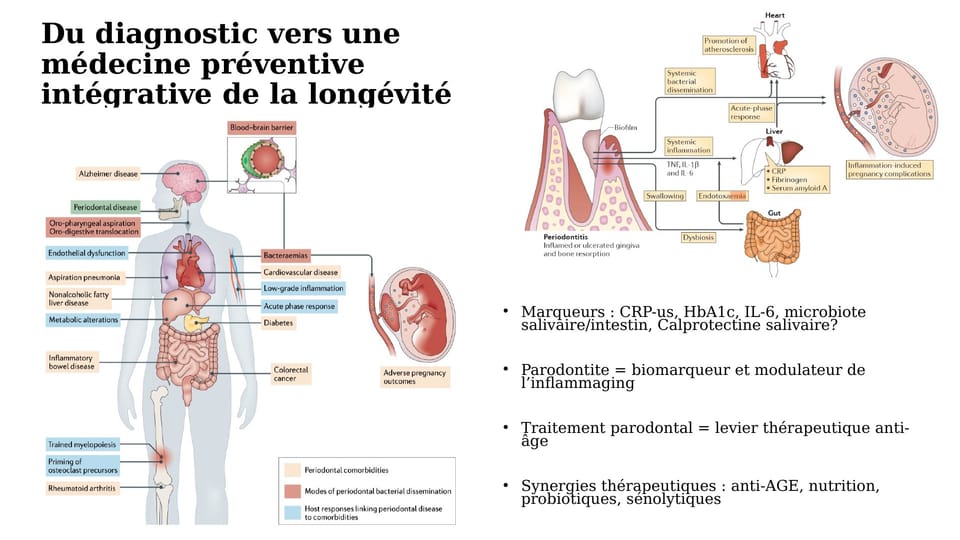
High-sensitivity CRP (hs-CRP), in context. CRP is a protein made by the liver in response to inflammation. Periodontal treatment lowers it by 0.69 mg/L on average at six months [14]. But it is not specific: infection, inflammatory disease, obesity or smoking also raise it. It may be of interest to your doctor when assessing cardiovascular risk; it is not used to diagnose or monitor periodontitis, which is monitored by examining the gums: bleeding, pocket depth, radiographs.
Who prescribes these tests? The GP. The periodontist's role is to identify the situations in which they are useful, to discuss them with the patient and, with their consent, to send a periodontal report to the doctor.
Tests with no demonstrated clinical value for guiding treatment
- Interleukin-1 (IL-1) genotype. Commercial tests claim to identify a genetic predisposition. A systematic review concluded that evidence linking this genotype to disease progression or treatment outcome is insufficient, and urged caution about these tests [2].
- Bacterial tests (analysis of pocket flora). They are not needed to treat periodontitis. When deciding on an adjunctive antibiotic, a retrospective study (425 patients) compared two strategies: a decision based on age and clinical severity gave clinical results comparable to a decision based on detecting a bacterium, with equally limited antibiotic use, even though the two strategies did not select the same patients [4]. European guidelines advise against routine use of antibiotics [6].
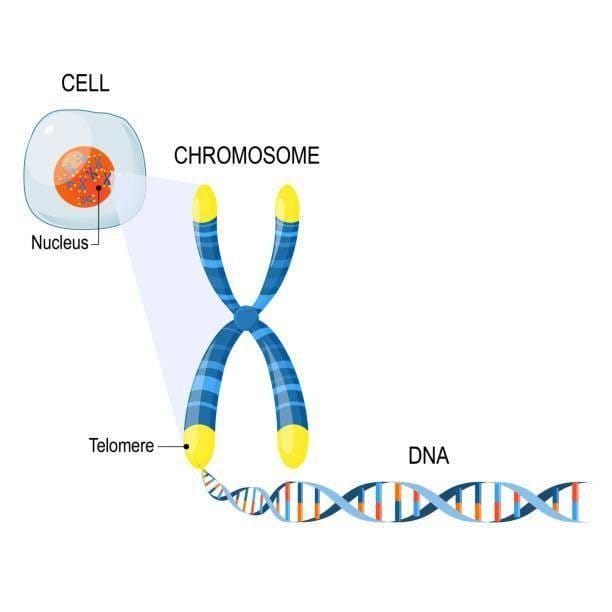
- Telomere length. Telomeres are the protective ends of chromosomes, which shorten with cell division. A meta-analysis of ten studies (22,625 participants) found no overall difference in telomere length between people with and without periodontitis, and states that measuring them does not predict periodontal risk [3].
The other markers studied in Dr Hazout's dissertation (IL-6, microbiota analysis, salivary calprotectin) are research tools: they currently have no validated threshold or recognised use for deciding on periodontal treatment. Likewise, your doctor may order a vitamin D test for other reasons, but it does not change the treatment of the gums. Commercial 'anti-ageing panels', which often bundle these markers, have no place in the management of periodontitis.
Food supplements: what the meta-analyses show
| Supplement | Result as an adjunct to periodontal treatment | Position / comment |
|---|---|---|
| Omega-3 | Modest gain: about 0.4 to 0.5 mm in pocket-depth reduction and attachment gain [15] [5] | Not recommended by the EFP in 2020 [6]; low to moderate certainty; variable doses and protocols |
| Vitamin D | No significant benefit on pocket depth; heterogeneous data [7] | Correcting a confirmed deficiency is a matter for the doctor |
| Vitamin C | Improves bleeding in gingivitis; no significant clinical effect on pockets at 3 months [8] | Favour fruit and vegetables |
| Probiotics | Inconsistent results | The EFP suggests not using them as an adjunct to treatment (R2.7) [6] |
| Coenzyme Q10 | Very uncertain evidence, heterogeneous and low-quality studies [9] | No conclusion possible on effectiveness |
Why are omega-3s debated? Several trials show a small gain, but they are heterogeneous (doses, durations, combinations), and in 2020 the European working group recommended not using them as an adjunct to treatment [6]. More recent meta-analyses are more favourable [5]. Dr Hazout therefore discusses them case by case, without presenting them as a treatment and without prescribing them: diet remains the first source (see nutrition and inflammation).
One point is common to all these supplements: even when an effect exists, it concerns periodontal measurements (a few tenths of a millimetre of pocket depth, slightly less bleeding), never a periodontitis that would heal without root surface debridement. No supplement treats periodontitis; at most, it accompanies well-conducted treatment.
Risks and interactions
- Omega-3: at high doses, risk of bleeding with warfarin or other anticoagulants; side effects are usually mild (unpleasant taste, heartburn, nausea, diarrhoea, headache) [10].
- Vitamin D: above the maximum intake set by health agencies, overdose causes hypercalcaemia, with kidney damage and heart-rhythm disorders in severe cases. Possible interactions with certain medicines (orlistat, statins, corticosteroids, thiazide diuretics) [11].
- Coenzyme Q10: possible interaction with warfarin and insulin, and possible incompatibility with some cancer treatments [16].
- In practice: tell your doctor, your pharmacist and the practice about any supplement.
To understand the role of diet, see the article on nutrition, micronutrition and inflammation. For an overview of the links between periodontitis and general diseases, see the general health page.
Frequently asked questions
Do I need a blood test before periodontal treatment?
Not routinely. An HbA1c is useful if you have diabetes or are at risk of it, in liaison with your GP, who prescribes it.
Can a genetic test tell me whether I am predisposed to periodontitis?
IL-1 genotype tests have not been shown to predict progression or response to treatment. They are not useful for treatment decisions.
Do omega-3s improve the outcome of treatment?
Some meta-analyses show a small gain, but the 2020 European guidelines do not support them. Dr Hazout discusses them case by case, without prescribing them, and reminds patients to check interactions with their doctor or pharmacist.
Should I take vitamin D for my gums?
Trials show no clear benefit as an adjunct to treatment. A confirmed deficiency is treated with your doctor, at the doses they set.
Are probiotics useful?
The EFP suggests not using them as an adjunct to periodontitis treatment, as the evidence is insufficient.
Can a supplement replace root surface debridement?
No. The effects measured in trials are modest and obtained in addition to mechanical treatment, never in its place. Periodontitis is treated first by cleaning the roots below the gumline, then by maintenance.
References
- Sanz M, Ceriello A, Buysschaert M, Chapple I, Demmer RT, Graziani F, et al. Scientific evidence on the links between periodontal diseases and diabetes: Consensus report and guidelines of the joint workshop on periodontal diseases and diabetes by the International Diabetes Federation and the European Federation of Periodontology. J Clin Periodontol. 2018;45(2):138-149. DOI
- Huynh-Ba G, Lang NP, Tonetti MS, Salvi GE. The association of the composite IL-1 genotype with periodontitis progression and/or treatment outcomes: a systematic review. J Clin Periodontol. 2007;34(4):305-317. PubMed
- Sun Q, Xiao J, Huo J. The association of periodontitis with telomere length: a meta-analysis. BMC Med Genomics. 2026;19:76. DOI
- Winkler P, Benz L, Nickles K, Petsos H, Eickholz P, Dannewitz B. Decision-making on systemic antibiotics in the management of periodontitis: A retrospective comparison of two concepts. J Clin Periodontol. 2024;51(9):1122-1133. DOI
- Benincasa G, Liguori MG, Tarallo F, Saccomanno S, Mancini L, Marchetti E. The role of omega-3 polyunsaturated fatty acids in the non-surgical management of periodontitis: a systematic review and meta-analysis. Front Oral Health. 2026;7:1761032. DOI
- Sanz M, Herrera D, Kebschull M, Chapple I, Jepsen S, Berglundh T, et al. Treatment of stage I–III periodontitis—The EFP S3 level clinical practice guideline. J Clin Periodontol. 2020;47(Suppl 22):4-60. DOI
- Gillani Haji A, Ghezzi B, Tagliaferri S, Bostanci N, Calciolari E. The effect of vitamin D supplementation on periodontal health: a systematic review and meta-analysis. Evid Based Dent. 2026 (publié en ligne le 19 août 2026). doi:10.1038/s41432-026-01244-w. DOI
- Fageeh HN, Fageeh HI, Prabhu A, Bhandi S, Khan S, Patil S. Efficacy of vitamin C supplementation as an adjunct in the non-surgical management of periodontitis: a systematic review. Syst Rev. 2021;10:5. DOI
- Merle CL, Lenzen C, Schmalz G, Ziebolz D. Systematic review on protocols of coenzyme Q10 supplementation in non-surgical periodontitis therapy. Nutrients. 2023;15(7):1585. DOI
- National Institutes of Health, Office of Dietary Supplements. Omega-3 Fatty Acids – Fact Sheet for Consumers (consulté le 3 octobre 2026). ods.od.nih.gov
- National Institutes of Health, Office of Dietary Supplements. Vitamin D – Fact Sheet for Health Professionals (consulté le 3 octobre 2026). ods.od.nih.gov
- Herrera D, Sanz M, Shapira L, Brotons C, Chapple I, Frese T, et al. Association between periodontal diseases and cardiovascular diseases, diabetes and respiratory diseases: Consensus report of the Joint Workshop by the European Federation of Periodontology (EFP) and the European arm of the World Organization of Family Doctors (WONCA Europe). J Clin Periodontol. 2023;50(6):819-841. DOI
- European Federation of Periodontology. Periodontitis and diabetes: a two-way street. EFP Publications hub (consulté le 3 octobre 2026). efp.org
- Luthra S, et al. Treatment of periodontitis and C-reactive protein: A systematic review and meta-analysis of randomized clinical trials. J Clin Periodontol. 2023;50(1):45-60. DOI
- Van Ravensteijn MM, Timmerman MF, Brouwer EAG, Slot DE. The effect of omega-3 fatty acids on active periodontal therapy: A systematic review and meta-analysis. J Clin Periodontol. 2022;49(10):1024-1037. DOI
- National Center for Complementary and Integrative Health (NIH). Coenzyme Q10 (mise à jour de janvier 2019). nccih.nih.gov
Related treatments

Periodontitis and general health: what the studies actually show
Periodontitis is a chronic inflammation of the tissues that support the teeth. Many studies associate it with general diseases: diabetes, heart and blood-vessel disease,…

Your first visit
The first appointment is about understanding: the state of your gums and bone, the causes, and the treatment options. It involves no painful treatment and ends with an…
Read next
Diabetes and periodontitis: understanding a two-way link
Diabetes increases the risk of periodontitis, and periodontitis makes diabetes harder to control. It is the most thoroughly documented relationship between the mouth and…
Periodontitis and diseases of the heart and blood vessels: where does the evidence stand?
People with periodontitis more often have cardiovascular disease. Cardiology and periodontology societies acknowledge this. But they also stress that no trial has yet…
Understanding periodontitis: recognising the signs and how it is diagnosed
Periodontitis is one of the most common chronic diseases, and one of the least noticed. It often progresses without pain, and its first signs look like merely irritated…
Patient pathway