Frequently asked questions
Short answers to the questions patients ask most often before seeing a periodontist, each with a link to the page of this site that covers the subject in depth.
Gums and periodontitis
My gums bleed when I brush: is it serious?
Bleeding is a sign of gum inflammation. It may be gingivitis, which is reversible, or periodontitis, which destroys the bone supporting the teeth. Only a full periodontal examination, clinical and radiographic, can tell them apart. Recognising the signs of periodontitis.
Can periodontitis be cured?
Lost bone does not grow back on its own, but the disease can be halted and the situation kept stable over time, provided the pockets are treated and regular maintenance follows. How periodontitis is treated.
Is periodontitis contagious?
Not in the usual sense. The bacteria involved are found in saliva and can pass from one person to another, but whether the disease develops depends mostly on each person's response: heredity, smoking, diabetes, oral hygiene. There is no need to keep apart; an examination of a partner is worthwhile if they have symptoms. The signs that should prompt a visit.
My teeth are loose: is it too late?
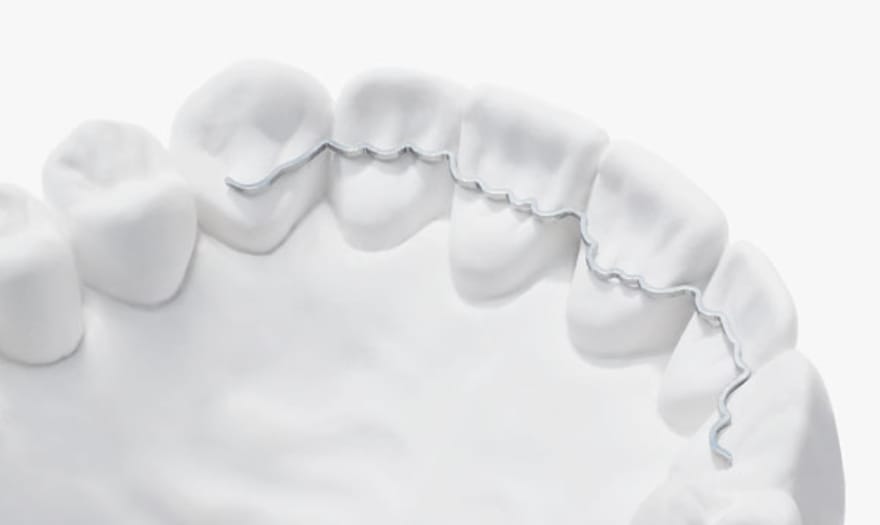
Not necessarily. Treatment halts the destruction and mobility often decreases; when it persists after substantial bone loss, teeth can be joined with a bonded splint. The examination shows which teeth can be kept. Periodontal splinting.
What are receding gums?
The everyday term for a gum that pulls back and exposes the root. It may be a localised gum recession, for instance on thin gum brushed too hard, or periodontitis destroying the supporting bone. The two are not treated the same way; the examination tells them apart. Gum recession and gum grafts.
Treatment
Is treatment done in one visit or several?
At the practice, initial periodontal treatment covers the whole mouth, all six sextants, in a single visit under local anaesthetic. A reassessment follows once the tissues have healed, and maintenance then takes over at a frequency set by your level of risk. Periodontal maintenance.
What is the laser for?
At the practice, the diode or Er:YAG laser complements debridement in certain pockets and is used in gum surgery, with little bleeding. Studies attribute a modest additional benefit to it; it does not replace mechanical cleaning. Diode and Er:YAG lasers.
Does gum recession always need a graft?
Not always. A stable recession that is barely visible and not sensitive, on healthy gum, can simply be monitored; a graft is discussed if it progresses, if sensitivity persists or if the appearance genuinely bothers you. When a graft is worthwhile.
Implants
Can I have an implant after periodontitis?
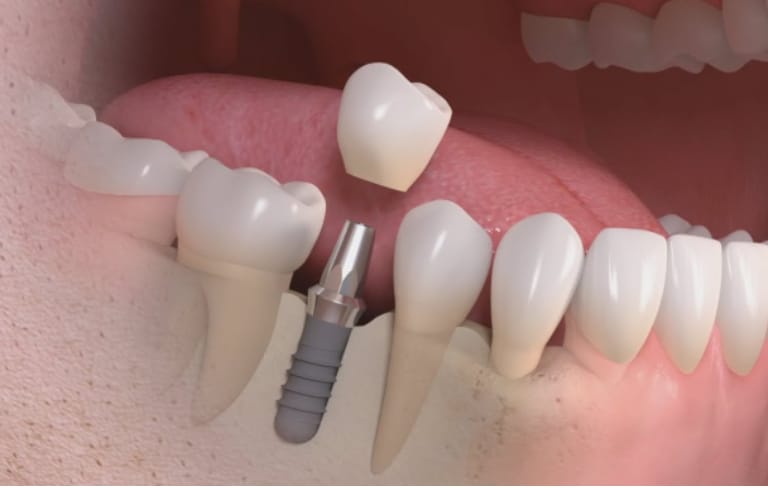
Yes, in general, once the disease has been treated and stabilised, with regular maintenance afterwards: a history of periodontitis increases the risk of peri-implantitis, inflammation with bone loss around the implant. Dental implants: the pathway, and who they suit.
I don't have enough bone: is it still possible?
Often, thanks to a bone graft or regeneration, sometimes with a custom-made titanium mesh; the choice depends on the shape and extent of the defect, measured on 3D imaging. Bone grafting before an implant.
The practice
Which days does Dr Hazout see patients?
Dr Hazout sees patients Monday to Thursday, 9 am to 7 pm, by appointment, at 119 rue du Président Wilson, Levallois-Perret. Appointments and contact.
How do I get there?
Metro line 3, Pont de Levallois–Bécon station, a 7-minute walk; bus 94, Baudin stop; a public car park open 24 hours a day, 5 minutes away. Getting to the practice.
Is treatment reimbursed?
The consultation is covered by French national health insurance at the agreed rates. Root surface debridement, with or without laser, is not, and neither are implants; a written estimate is given before any treatment and shows what you will pay. Fees.