Root planing in 35 seconds
Root planing, or root surface debridement, is the central step in treating periodontitis: cleaning the roots below the gum, where tartar and bacteria lodge out of reach of the toothbrush. This 35-second educational animation shows what happens inside a periodontal pocket, then the procedure itself. The transcript below follows the narration line by line.
The animation
The video plays from this site as encrypted segments. It does not replace an examination: pocket depth and bone level are assessed in the chair, by clinical examination and X-rays, at the first visit.
Transcript
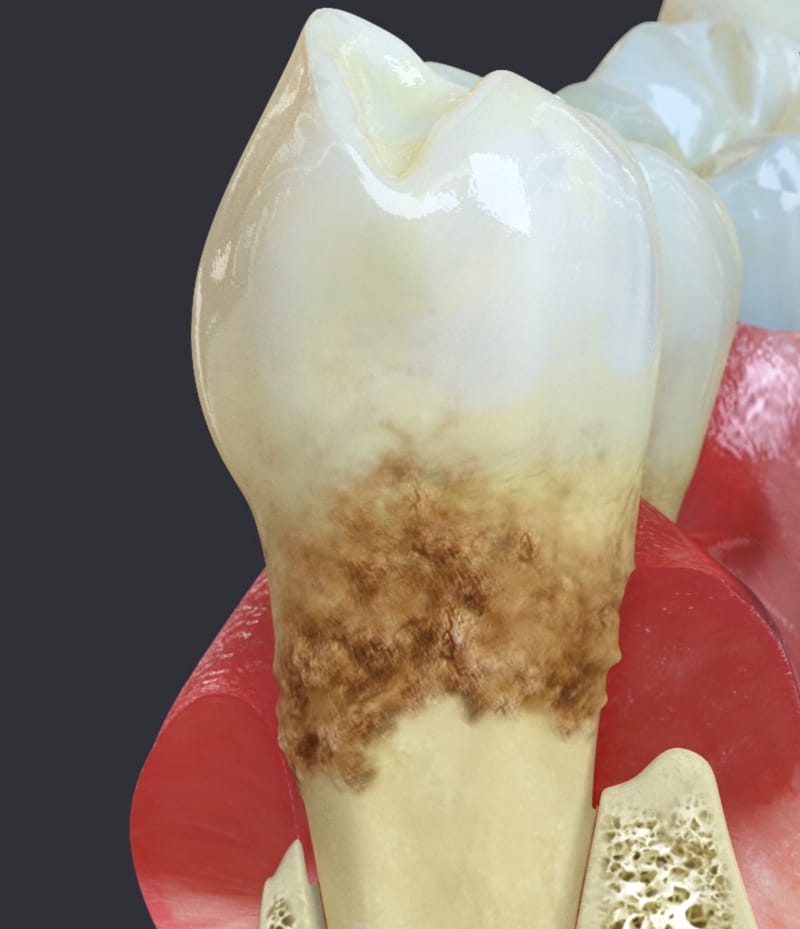
Lower jaw. Bacterial plaque builds up at the edge of the gum.
The gum becomes inflamed: it reddens, swells and bleeds easily.
Below the gum, the bone that supports the teeth is resorbed.
Root planing: a fine instrument cleans each root below the gum.
The deposit of tartar and bacteria is removed tooth by tooth.
Cross-section: the tartar attached to the root is removed so that the gum can heal against it.
What the animation shows
- Plaque builds up at the gum line, then spreads below the gum.
- The gum responds with inflammation: redness, swelling, bleeding.
- Without treatment, the bone supporting the tooth is gradually lost, painlessly.
- Root planing removes the tartar and bacteria attached to the root below the gum.
- After cleaning, the gum shrinks back and tightens around the root; pocket depth decreases.
The steps of treatment, from assessment to maintenance, full-mouth treatment in a single session as Dr Hazout practises it in Levallois-Perret and the results you can expect are described on the periodontitis treatment page. The place of lasers, as a complement to this mechanical cleaning, is explained on the lasers page.
Patient pathway