How is a titanium mesh made by 3D printing?
A custom titanium mesh is made as a single piece, for one patient and one bone defect. Between the scan image and the sterile part used in theatre lie a digital workflow and a precise industrial process. This article describes each link in the chain, its tolerances and its limits, and then what this manufacturing changes, and does not change, for the patient.
Key points
- The mesh is designed on a computer from cone beam CT images (DICOM files), then converted into a 3D file (STL) for manufacturing.
- It is most often made by laser powder bed fusion of titanium (SLM or DMLS), layer by layer.
- The material is medical-grade titanium, often the Ti-6Al-4V alloy, sometimes unalloyed titanium.
- After printing: support removal, heat and surface treatments, dimensional inspection, cleaning and sterilisation.
- Laser metal deposition (DED), seen in some industrial videos, is a different process that is not used to make these meshes.
From image to part: the digital workflow
It all starts with a cone beam CT, the three-dimensional dental scan. It produces images in DICOM format, the medical imaging standard. These images are greyscale slices: they do not yet contain an “object” that can be manufactured.
A review of 23 studies describes the following steps [1]:
- Segmentation: the software isolates bone from other tissues and turns it into a 3D model.
- Conversion to STL: the model is exported to a surface format used by all printing machines.
- Design (CAD): the bone volume to rebuild is drawn around the future implants, then the mesh is shaped over that volume: thickness, perforations, screw positions.
- Manufacturing, quality control and sterilisation, usually by a specialist manufacturer.
The quality of the mesh depends first on the quality of the image. A review of recommendations points out that the accuracy of measurements on cone beam CT varies widely between machines, and that metal artefacts (crowns, old implants) and patient movement can degrade it [2]. A part of the ridge that is poorly visible on the image will be poorly reproduced by the mesh.
The planning logic, which starts from the position of the future crowns, is covered in the article Why plan in 3D before a bone graft and an implant?
Laser powder bed fusion
The international vocabulary standard for additive manufacturing (ISO/ASTM 52900) groups processes into seven families. The one used for meshes is powder bed fusion: thermal energy selectively fuses regions of a powder bed [3].
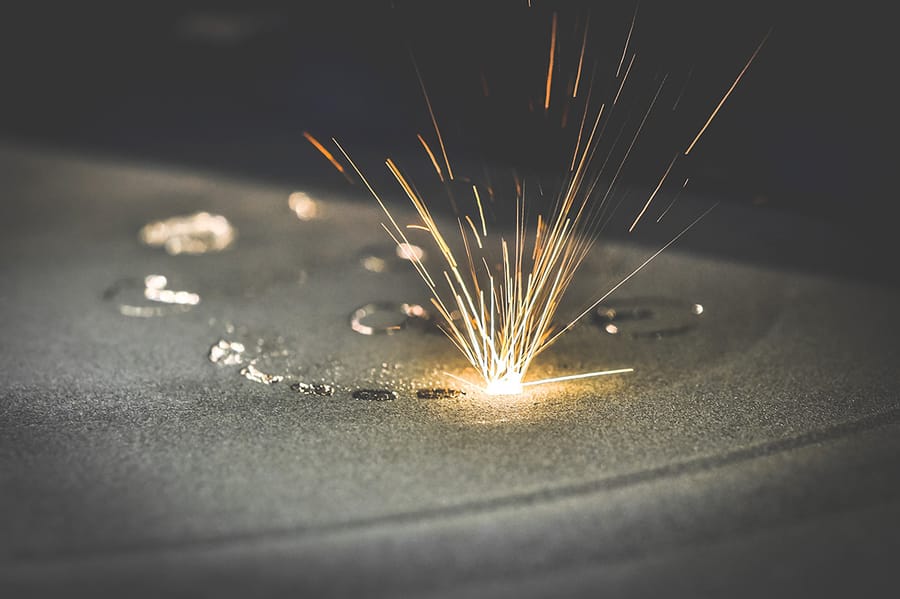
In practice, the machine spreads a very thin layer of titanium powder, a few tens of micrometres thick. A laser scans the surface and melts the powder only where the mesh must exist. The build plate drops by one layer thickness, a new layer of powder is spread, and so on. Melting takes place under inert gas (argon), because hot titanium reacts with oxygen in the air.
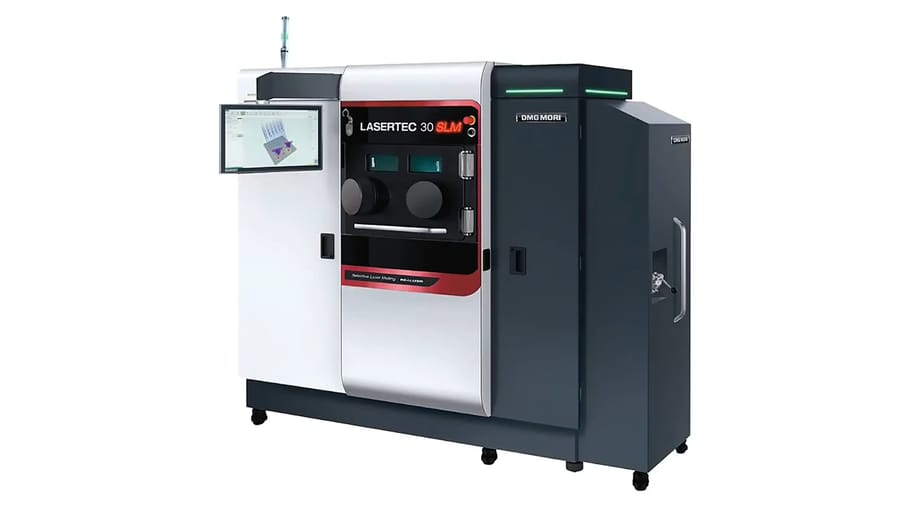
The acronyms SLM (selective laser melting) and DMLS (direct metal laser sintering) refer to variants or trade names within this same family. In the review cited above, 7 studies used SLM and 9 used DMLS for titanium meshes [1].
Why this process? It can produce thin, curved, perforated shapes that cannot be obtained by bending a sheet, and a different part for each patient without dedicated tooling.
What about machining?
Machining removes material from a block with cutters, like a sculptor. For titanium meshes it is used mainly for finishing: surface correction, drilling, dimensional adjustments [4]. Five-axis milling is also used to make other custom scaffolds, in PEEK (a polymer) or bone, from pre-formed blocks [1].
The material: which titanium?
Titanium has been the reference metal for dental implants and bone surgery plates for decades. In contact with air or tissue, its surface spontaneously forms a thin, stable oxide layer that makes it very unreactive in the body: this is what is meant by its biocompatibility. It is also light, rigid for its weight and can be produced in very thin sheets, three qualities useful for a mesh that must hold a volume without irritating the gum covering it.
Two families are used. Ti-6Al-4V (titanium alloyed with 6% aluminium and 4% vanadium, known as “grade 5”) is the reference alloy in metal 3D printing. A dedicated standard, ASTM F3001, covers its extra-low-interstitial (ELI) version made by powder bed fusion; it addresses the powder, process parameters, composition, mechanical properties, heat treatment and dimensional inspection [5].
Unalloyed titanium (grades 2 or 4) is also used. In the review of 23 studies, grade IV, Ti-6Al-4V and grade V were all found [1]; a Japanese series of 14 cases used grade 2 titanium in 0.3 mm sheets [6]. Mesh thickness varies between studies, from 0.1 to 2 mm, around 0.5 mm on average; the two studies that report perforation size give about 1 mm [1].
After printing: post-processing
A part straight out of the machine cannot be used as it is. The usual steps are:
- Removal of unfused powder and cutting away the supports that held the part during printing.
- Heat treatment to relieve internal stresses caused by rapid melting and cooling cycles; hot isostatic pressing (HIP) can reduce residual porosity [4, 5].
- Surface treatment: melting leaves partly fused powder particles on the surface, removed by polishing, blasting or chemical or electrochemical etching [1, 4].
- Dimensional inspection, cleaning and packaging.
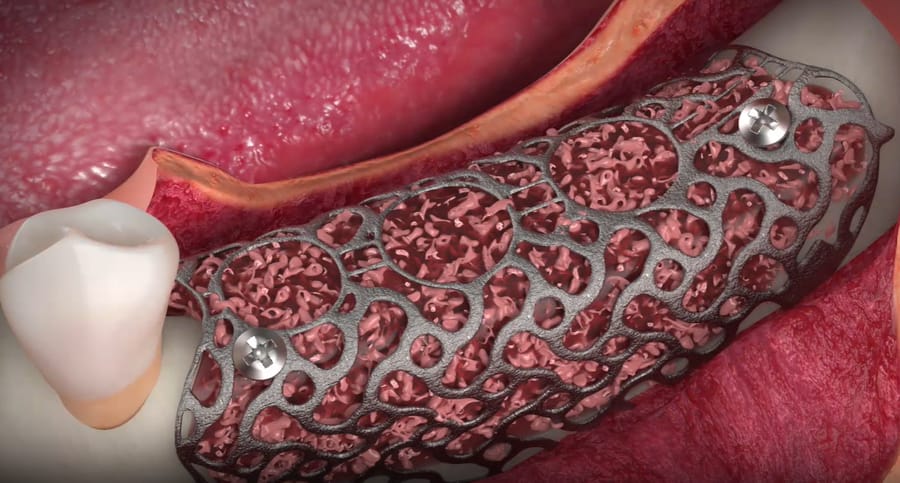
Sterilisation
The mesh is either supplied sterile by the manufacturer or sterilised at the practice using a validated protocol, for example by autoclave (pressurised steam). The review of 23 studies notes that the sterilisation method is not reported in many publications [1]; the Japanese series describes autoclaving at 121 °C [6]. At Dr Hazout’s practice in Levallois-Perret, sterilisation follows the usual pathway for medical devices, with traceability.
How accurate is it?
Three levels of accuracy must be distinguished. First, the image, which depends on the cone beam CT [2]. Next, manufacturing: one manufacturer states dimensional deviations of about ± 0.1 mm for features of comparable size [7]. Finally, placement: on models, the mean deviation between planned and achieved contour was about 0.8 to 1 mm depending on mesh design, with a “self-positioning” design reducing the deviation [7]. That study was carried out in vitro: it does not replace measurements in patients.
In other words, the machine is rarely the weak link. Image quality, design and the stability of the mesh during surgery matter more.
Not to be confused with laser metal deposition (DED)
In directed energy deposition (DED), powder or wire is fed into the laser beam and melted as it is deposited [3]. It is another family in the ISO/ASTM 52900 standard. It is mainly used to build or repair large industrial parts. Its resolution is not suited to a shell a few tenths of a millimetre thick such as a dental mesh.
What does it mean for the patient?
Additive manufacturing does not change the biology: it is still the graft that becomes bone. What it offers is a part fitted before the operation, with no bending at the chairside, which limits sharp edges and operating time [8].
Nor does it remove the complication known to all titanium meshes: exposure, when the gum opens and the metal becomes visible. In the literature it most often affects 20 to 30% of cases, and early exposure, in the first weeks, is associated with more fibrous tissue and less bone formation [8]. The smooth edges and precise fit of a printed mesh reduce pressure points on the gum, but tension-free closure of the gum and stopping smoking remain decisive. The clinical figures, how an exposure is managed and the treatment steps are presented on the Custom titanium mesh page.
Frequently asked questions
Is a printed mesh as strong as a conventional one?
Laser-melted titanium, after appropriate heat treatment, reaches mechanical properties defined by industrial standards. Above all, the mesh must be rigid enough to hold the volume and thin enough to be covered by the gum.
Is my mesh made at the practice?
No. The design is approved by the surgeon, but laser fusion manufacturing takes place at a specialist manufacturer with the necessary machines and inspection.
Why do some videos show a robotic arm depositing metal?
That is laser metal deposition (DED), an industrial process for large parts. Dental meshes are made by laser powder bed fusion, a finer process.
Can the printed mesh be seen or felt once in place?
Not when all goes as planned: it is fully covered by the gum and cannot be felt. If part of the metal becomes visible, this is an exposure, the complication described above.
References
- Elrefaei SA, Parma-Benfenati L, Dabaja R, Nava P, Wang HL, Saleh MHA. Customized 3D-Printed Scaffolds for Alveolar Ridge Augmentation: A Scoping Review of Workflows, Technology, and Materials. Medicina (Kaunas). 2025;61(7):1269. DOI
- Jacobs R, Salmon B, Codari M, Hassan B, Bornstein MM. Cone beam computed tomography in implant dentistry: recommendations for clinical use. BMC Oral Health. 2018;18:88. DOI
- ISO/ASTM 52900:2021. Additive manufacturing — General principles — Fundamentals and vocabulary. Genève : ISO ; 2021. cdn.standards.iteh.ai
- Zhang H, Tang X, Guo W, et al. A short review of the post-processing of titanium alloys processed by selective laser melting. Int J Adv Manuf Technol. 2025;138(9):4121-4136. DOI
- ASTM F3001-14(2021). Standard Specification for Additive Manufacturing Titanium-6 Aluminum-4 Vanadium ELI (Extra Low Interstitial) with Powder Bed Fusion. West Conshohocken (PA) : ASTM International ; 2021. store.astm.org
- Takahashi A, Inoue K, Imagawa-Fujimura N, et al. Clinical Study of 14 Cases of Bone Augmentation with Selective Laser Melting Titanium Mesh Plates. Materials (Basel). 2023;16(21):6842. DOI
- Zhang J, Chen Y, Tao X, Zhang K, Xu C, Yu D. In vitro evaluation of a self-positioning individualized titanium mesh for improved accuracy in guided bone regeneration. Front Bioeng Biotechnol. 2026;14:1718616. DOI
- Xie Y, Li S, Zhang T, Wang C, Cai X. Titanium mesh for bone augmentation in oral implantology: current application and progress. Int J Oral Sci. 2020;12:37. DOI
Related treatments
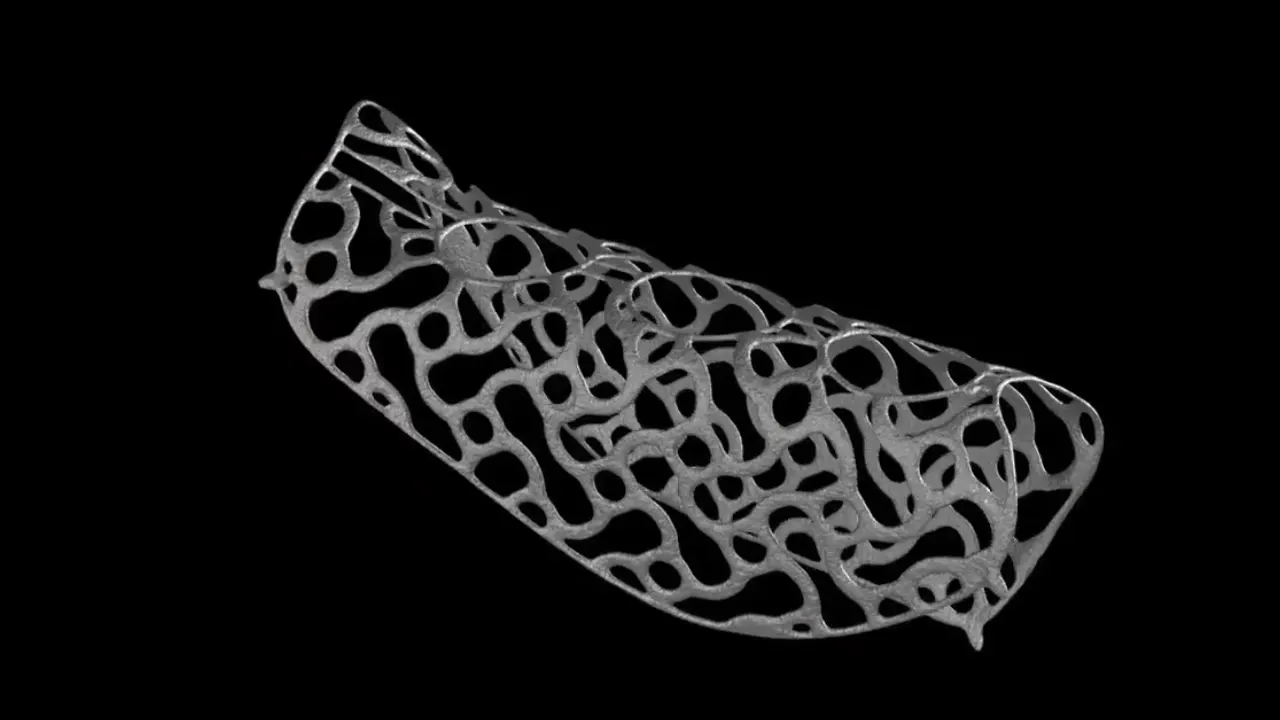
Custom titanium mesh: what it is for and the principle of treatment
When a lot of bone is missing, in height as well as width, the graft material must be held in shape during healing. A custom titanium mesh does this job, like formwork.…
Bone grafting before an implant: when, and which techniques
An implant must be surrounded by bone along its whole length. When bone is lacking, several techniques can rebuild it. They are not equally suited to every situation:…
Read next
Why plan in 3D before a bone graft and an implant?
A conventional X-ray shows bone from the front, like a shadow. It says nothing about its width. Yet width is often what decides whether an implant can stand on its own,…
Gum care around implants: preventing peri-implant mucositis and peri-implantitis
An implant cannot decay, but the gum and bone around it can become inflamed and break down, sometimes faster than around a tooth. The two diseases involved, peri-implant…
Patient pathway